2026 Hyundai Ioniq 6 N: Electric Sport Sedan Excels
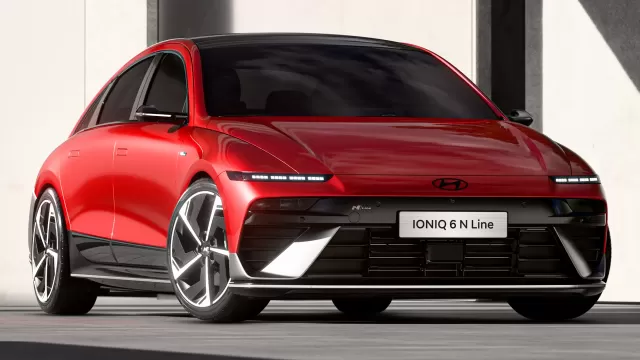
Much of the 6 N's high-performance architecture draws inspiration from the highly acclaimed Ioniq 5 N SUV, a vehicle that has already set new benchmarks for EV performance, claiming numerous accolades and delivering pure driving joy. At its core lies a formidable dual-motor powertrain, capable of unleashing up to 641 horsepower and 568 lb-ft of torque during peak demand, settling at a robust 601 hp and 545 lb-ft under normal conditions. Optimal rear-wheel traction is ensured by an electronically controlled limited-slip differential, propelling the 6 N from 0 to 60 mph in likely under three seconds. However, this is no mere electric drag car; its chassis has been meticulously refined with adaptive suspension damping, hydraulic bushings, and additional structural reinforcement to enhance feel and precision. Its widened stance accommodates bespoke wheels, complemented by substantial braking hardware designed for powerful deceleration.
The Ioniq 6 N is more than just a sedan variant of the Ioniq 5 N. It incorporates unique structural enhancements, including bracing struts connecting the trunk and rear seats to boost torsional rigidity. While sharing the same ground clearance, the 6 N's lower overall profile contributes to a roll center approximately four inches below that of the 5 N, promising a distinct handling character. Furthermore, its unique swan-neck rear wing can generate over 200 pounds of downforce at its estimated top speed of 160 mph, a feature absent on its crossover sibling. Hyundai's objective was to imbue the 6 N with a more focused demeanor compared to the 5 N – emphasizing grip and precision for heightened control on both track and street, though a configurable drift mode ensures that spirited antics remain readily available.
Mastering Dynamic Configuration
While the sheer number of possible configurations is vast, the Ioniq 6 N consistently delivers an engaging experience regardless of its specific setup (with the probable exception of Eco mode). As a pure EV, its torque delivery is instantaneous, with power sustained effortlessly even at high speeds, a characteristic vividly demonstrated on the straightaways of the Korea International Circuit. The E-GMP platform's exceptional regenerative braking capabilities allow for a fluid driving rhythm through curves, primarily controlled by accelerator modulation.
One of the Ioniq 6 N's most innovative features is its ability to simulate a combustion engine experience. At the press of a button, the electric motors adjust to mimic an internal combustion engine's powerband, complete with a virtual tachometer and paddle shifters that engage simulated gears. This system responds realistically, bouncing off a synthetic rev limiter if not upshifted and resisting downshifts at excessively high virtual RPMs. The 6 N's "transmission" is programmed with tighter gear spacing than the 5 N, replicating a close-ratio eight-speed gearbox that encourages active paddle use. This engaging simulation is optionally enhanced by a choice of three digital exhaust notes, providing an audible cue that complements the driving experience.
This remarkably convincing "gimmick" is undeniably fun, yet it sparks interesting discussions about the identity of the Ioniq 6 N – why emulate something it's not, when other high-performance EVs achieve greatness without such artifice? Nevertheless, the feature can be disengaged, leaving an equally compelling native EV driving experience. The only element potentially missing from the simulation is engine-like vibration to truly complete the illusion.
In terms of other dynamic characteristics, the brake pedal offers strong, consistent stopping power, though it could benefit from improved tactile feedback, the sensation of pads biting rotors being somewhat muted. The bespoke Pirelli P Zero Elect tires perform admirably on public roads but exhibited some loss of grip after multiple hot laps on the track, suggesting that dedicated track enthusiasts might opt for more aggressive rubber.
Addressing Electric Vehicle Realities
The primary practical consideration for the Ioniq 6 N is its range. While expected to surpass the 224 miles recorded for the Ioniq 5 N, potentially nearing Hyundai's estimated 240 miles, this figure may still be less than ideal for extensive long-distance travel. Aggressive track driving, as experienced at the Korea International Circuit, rapidly depletes the 84.0-kWh battery's charge, accompanied by a noticeable reduction in power output as the laps accumulate. Recharging, however, is less of a concern. Vehicles built on the E-GMP platform are renowned for their rapid charging capabilities, provided a compatible fast charger is accessible.
A New Standard for Performance Sedans
Hyundai has indicated that the Ioniq 6 N will be available in "limited quantities" in the United States, though the precise implications of this remain undefined. Industry observers might attribute this to ongoing skepticism surrounding EVs, as well as potential tariff considerations given its production in Korea. For those who appreciate the essence of a truly great sport sedan, the potent Ioniq 6 N is clearly engineered to compete with the world's elite.